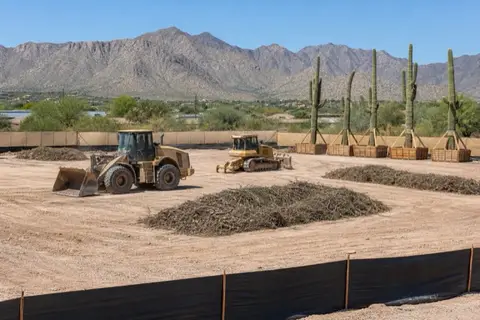
Brush mulching, lot clearing, and defensible space across Scottsdale's high-desert foothills — free written quotes from a local operator.
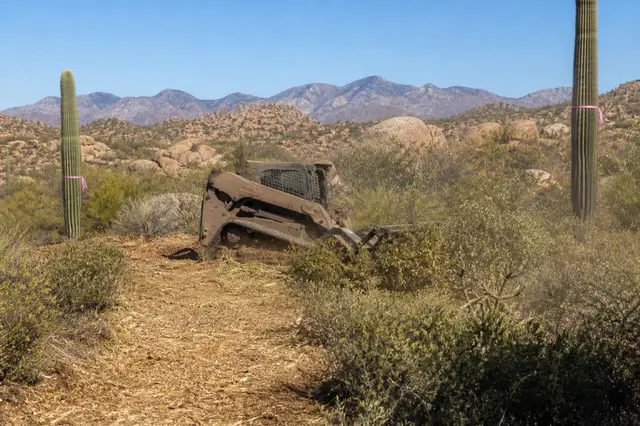
The saguaro is highly safeguarded under Arizona's native plant law. On every job they're flagged before engines start, machines keep a respectful arc, and any true conflict is solved by permitted salvage — never by the mulcher head.
ARS Title 3 · Protected Native PlantsDisturb a tenth of an acre in Maricopa County and the job needs a dust control permit with a written plan — watering, track-out pads, stabilized soil. It's how the Valley keeps cleared ground out of the air.
Maricopa County · Rule 310Scottsdale's native plant ordinance wants an inventory before clearing: which cacti and desert trees stay in place, which get boxed and replanted. The paperwork happens up front, so the machine work is clean and legal.
Scottsdale City Code · Ch. 46 Art. V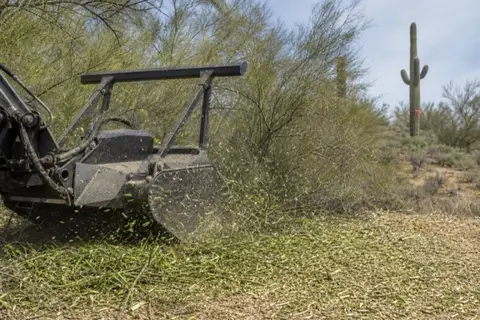
A drum mulcher grinds desert brush into chips where it stands — no haul-off, no scraped-bare dust source, saguaros flagged and untouched.
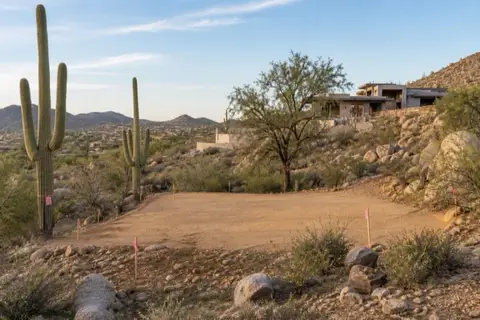
Custom-homesite clearing in Scottsdale's boulder country — pad opened, protected plants salvaged or kept, dust permit and plan handled.
| Brushy desert acre, light growth | under $2,400 |
| Dense mesquite & tree cover, per acre | $3,400–$6,200 |
| Forestry mulching, machine hour | $150–$250 |
| Stump ground out, typical first | ~$330 |
| Added stumps on the same visit | $40–$85 |
Around Scottsdale the number moves with slope, boulders, access, and how many protected plants the job must work around. The only figure that counts is a written one for your parcel — free and itemized.
Price My ParcelContractor and owner cover the ground together: what opens up, what stays, where the machine gets in, where the wash runs.
Saguaros, ironwoods, keeper palo verdes, and survey corners get flagging tape before anything starts. Notices and permits are filed here too.
Mulcher or grubbing bucket does its work — brush ground into cover chips, or a pad stripped clean under an active dust plan.
Grades trued, wash edges respected, track-out swept, mulch raked even. The lot matches the itemized quote you signed off on.
High Sonoran Land Clearing puts Scottsdale-area property owners in front of a local land clearing contractor who works this desert on its own terms: drum mulchers that turn brush into ground cover instead of dust, flagging tape on every saguaro and ironwood before an engine starts, native-plant notices filed with the state ahead of schedule, and a Maricopa County dust plan on any job that opens more than a tenth of an acre of decomposed granite. From boulder lots under Pinnacle Peak to horse acreage out toward Rio Verde, quotes come back free, written, and itemized.
Tell us about the parcel — a local land clearing contractor replies with a written, line-item price.
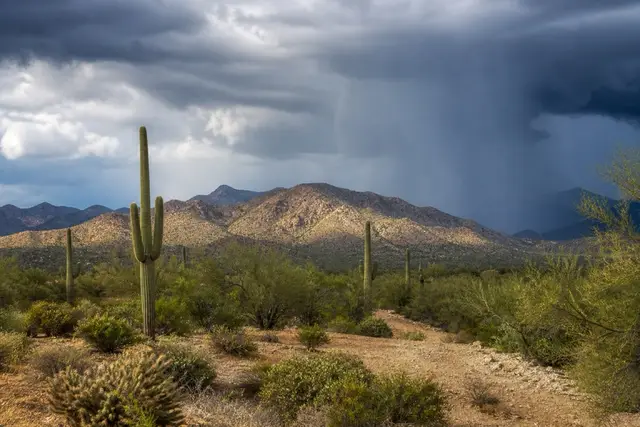
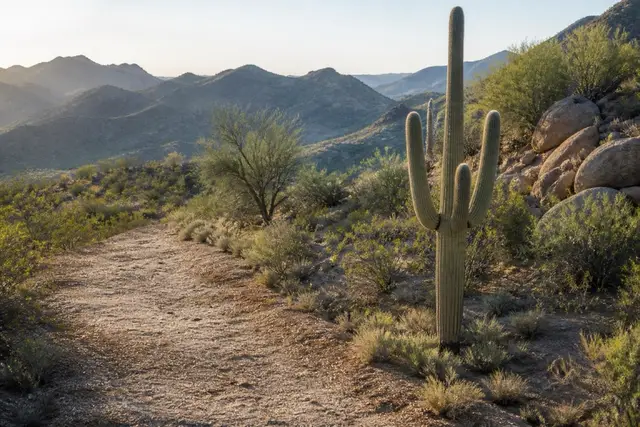
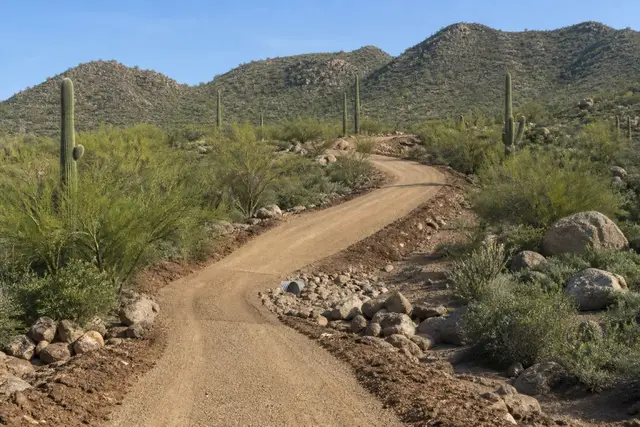
The high Sonoran, drawn not to scale
Desert lots are usually cheaper to open up than forested ones, because most of the vegetation is brush-sized. National cost guides price light clearing under a thousand dollars an acre and dense growth several times that, but the real driver in north Scottsdale is protected plants: a lot where every saguaro and ironwood must be worked around, salvaged, or tagged takes more machine hours than a bare creosote flat. Send the parcel through this site and a local contractor walks it and returns a written, itemized number for free.
Plan on keeping them. Saguaros sit in the highly safeguarded category of Arizona's native plant law, and Scottsdale's own ordinance requires a plan for every protected plant on a project site. In practice a clearing job here designs around the saguaros: they get flagged, machines keep their distance, and if one truly conflicts with a building footprint it is moved under a state permit by an experienced salvage crew — not cut down.
Usually two kinds. Arizona's native plant law asks landowners to notify the state Department of Agriculture before destroying protected plants — the notice runs from 20 days on small parcels up to 60 days on tracts over forty acres. Separately, Maricopa County requires a dust control permit once you disturb a tenth of an acre or more. The contractor your request goes to treats both as routine first steps, not obstacles.
It's a maintained buffer around your home where flammable vegetation is thinned or removed, and yes — the desert burns now. Invasive grasses like buffelgrass and red brome carry fire between shrubs that would never have burned on their own. Arizona's forestry department recommends working outward from the house in zones, keeping the first 30 feet cleanest. On hillside lots around Carefree, Troon, and Desert Mountain, that thinning is the single most useful clearing job a homeowner can order.
It shouldn't, and county rules discourage it. Mulching machines grind brush into a layer of chips that holds the decomposed granite in place, which matters twice a year: during monsoon downbursts that wash loose soil into the street, and on dry windy days when a scraped lot becomes a dust source. Where a pad has to be grubbed clean for construction, watering and track-out controls come with the dust permit.
A local operator, not this website. High Sonoran Land Clearing is an independent local marketing site: calls and quote requests are handed to a land clearing contractor working the Scottsdale area, and every quote comes back free, written, and itemized. Scheduling, pricing, and the contract are directly between you and that contractor.